

MONTMORENCY FALL: COMPLETE GUIDE
MONTMORENCY FALL: COMPLETE GUIDE
Loading ...
Newsletter
Receive the expertise of our editorial team: thematic dossiers, exclusive discoveries and our top picks throughout the seasons.
No spam. Easy unsubscribe at any time.
MONTMORENCY FALL: COMPLETE GUIDE
MONTMORENCY FALL: COMPLETE GUIDE
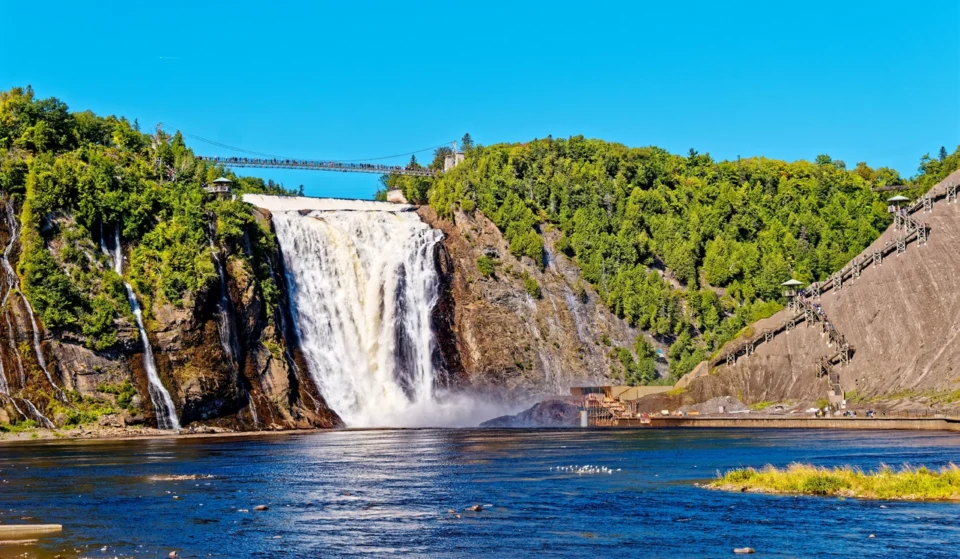
Just 15 minutes from Old Quebec via the Dufferin-Montmorency Highway, Montmorency Falls is one of Quebec's most spectacular natural sites—and one of the most accessible. At 83 meters high, 30 meters taller than Niagara Falls, it impresses every first-time visitor. The Montmorency Falls Park, managed by Sépaq (Parcs Québec), allows visitors to explore it from every angle, in every season.
The decline in figures
How to get to Montmorency Falls
By car : From Old Quebec, take the Dufferin-Montmorency Highway (440 East) to the exit for the park. Parking is available on site (fee required). Travel time: 15-20 minutes.
By bus: The RTC's 800 (Metrobus) route passes near the park. Several city buses serve the area. This is the most economical option for visitors without a car.
On a guided tour: Many tour operators in Old Quebec offer half-day trips to Montmorency Falls combined with a stop on Île d'Orléans.
Explore the park
The cable car
The cable car at Montmorency Falls Park is an attraction in itself—the view during the ascent, with the falls unfolding in all their splendor beside you, is spectacular. The cabin ascends from the base of the falls to the top in just a few minutes. During the season (spring to fall), it operates regularly. A combined cable car and park admission ticket is available.
The suspended footbridge
At the top of the falls, a suspension bridge spans the Montmorency River just before it plunges. Walking on this bridge and watching the water rush into the void below is a breathtaking—and memorable—experience. The view of the St. Lawrence River, Île d'Orléans, and Quebec City in the distance is equally spectacular.
The stairs
For active visitors, stairs allow you to walk up and down alongside the falls. The climb is strenuous (approximately 487 steps) but offers views of the falls from different heights. The descent is easier. Hiking or walking shoes are recommended.
The Montmorency Manor
At the top of the park, the Montmorency Manor is an elegant building (rebuilt after a fire in 1993) that houses a restaurant with a panoramic terrace overlooking the river and the waterfall. It's ideal for lunch or dinner with a view after visiting the park.
Montmorency Falls in winter — Sugarloaf Mountain
Winter transforms Montmorency Falls into a natural spectacle unlike any other in the world. The frozen spray that settles at the base of the falls gradually accumulates to form the "Sugarloaf"—an ice cone that can reach 30 meters in height some years. This geological phenomenon has been observed for centuries and already fascinated European explorers in the 17th century.
In January and February, the park is teeming with winter outdoor enthusiasts: ice climbing on the Sugarloaf (for experienced climbers with a guide), observing the phenomenon, and cross-country skiing on the park's trails. The view of the frozen waterfall framed by snow-covered cliffs is one of the most beautiful images of a Quebec winter.
The Quebec City Crossing (late January) uses the area around the park as one of its stages. The river's flow never stops completely, even at -20°C — the falls themselves remain in motion even if their banks are frozen.
Spring — The spectacle of the thaw
With the snowmelt in April and May, the flow of the Montmorency River increases dramatically—sometimes 10 to 15 times its normal summer flow. The falls roar, the mist of suspended water creates constant rainbows, and the sheer power of the water is viscerally awe-inspiring. It's technically the best season to see the falls in all their power—but also the wettest if you get too close.
The Battle of Montmorency Falls (1759)
Montmorency Falls was the site of a major episode in the British conquest of Quebec. On July 31, 1759, British forces under General Wolfe attempted to cross the Montmorency River and scale the cliffs to attack Quebec from the flank. The attack failed, resulting in heavy British losses, as they were repelled by French and Canadian troops. This battle preceded by two months the Battle of the Plains of Abraham (September 13, 1759), which would decide the fate of the city.
Practical advice
→ Discover all the attractions of the greater Quebec City region In the directory Voilà Québec.
(I.e. Voilà Québec — Tourist guide to the greater Quebec City area since 1978.
Also read on Voilà Québec
More posts